Center Based Programs
From the moment you enter an Opal Autism Center, you will feel the joy and warmth of our care. Laughter, learning and fun are built into everything we do here at Opal.
Center-Based ABA Therapy
Choosing ABA therapy for your child is one thing. Choosing where that therapy happens is another question entirely—and it matters more than most parents expect. Center-based ABA therapy places your child in a purpose-built learning environment staffed by BCBAs, behavior technicians, and support specialists who work together every single day. It’s not just therapy with walls around it. The structure itself is part of how children learn.
Ready to see what a typical day looks like at Opal? Call your nearest location for a free consultation — our team works to get families started as quickly as possible.
Our Themed Rooms
Our centers are designed specifically for children ages 0–6. Each room serves a different purpose in your child’s daily therapy schedule.
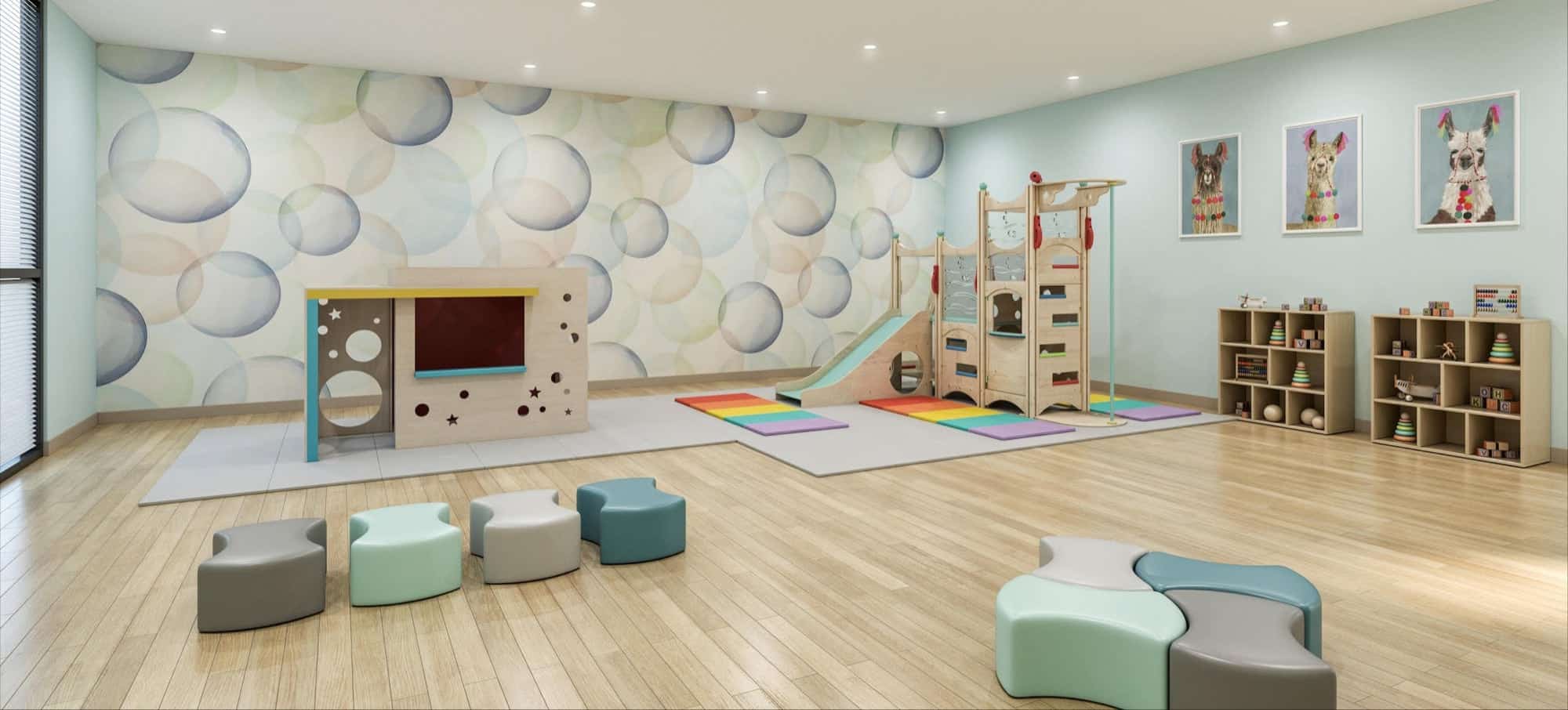
*Artist Rendering
Craft/Circle Room
Early Learner Room
Engaging Gross Motor Room
Sensory Room
Parent Training Room
Learn Room
What Actually Happens During Center-Based ABA Therapy
Drop-off feels ordinary. The extraordinary part happens inside.
Your child works one-on-one with a registered behavior technician (RBT) under the direct supervision of a board-certified behavior analyst (BCBA). Sessions rotate between structured skill-building activities and naturalistic play—because children learn through both. A BCBA might spend 20 minutes working on imitation skills with blocks, then shift to snack time, where following directions and tolerating transitions become the lesson. This approach is backed by decades of evidence-based ABA research showing that consistent, structured intervention produces lasting skill gains.
For most children ages 0 to 6, center-based ABA therapy sessions run anywhere from 15 to 25 hours per week, with intensity based on each child’s individualized assessment. Every goal is written into a formal treatment plan, tracked session by session, and adjusted when your child masters a skill or when something isn’t working. Nothing is guesswork.
Why the Center Environment Changes What's Possible
Home-based therapy is effective. Center-based ABA therapy has distinct advantages that are hard to replicate anywhere else—and the biggest one has nothing to do with the curriculum.
It’s the environment itself. Therapy rooms at Opal are designed to reduce sensory overwhelm: controlled lighting, organized materials, quiet spaces for regulation. Children who struggle to focus at home often surprise their parents with how long they sustain attention in that setting. When the space is built for learning, learning happens faster.
There’s also what happens between sessions. At a center, children practice social skills alongside real peers—turn-taking, tolerating noise, initiating a request to a friend. These aren’t add-ons to the therapy. They’re how skills get generalized into the world your child is actually going to live in. And while your child is in session, you get something rare: a few hours where you’re not the one managing every moment. That breathing room matters more than most parents expect.
Is Center-Based ABA Therapy Right for Your Child?
Most children ages 0 to 6 who qualify for ABA therapy do well in a center-based setting. It works especially well when your child benefits from consistent routines—centers run on predictable schedules, which reduces anxiety for many children on the spectrum. When Thursday looks like Wednesday looked like Tuesday, the brain can focus on learning instead of orienting.
It also works well when your home has high sensory or social complexity. Multiple siblings, open-concept spaces, frequent visitors—these aren’t problems, but they compete with therapy. Centers eliminate that competition. And if your child needs peer exposure before kindergarten, center-based therapy builds those kindergarten readiness skills deliberately.
If your child has significant anxiety around new environments, that’s worth discussing during your consultation—not a reason to rule out center-based therapy, but a factor your BCBA will address directly in the treatment plan.
Your Child's First Visit: What to Expect
First visits are low-pressure by design. Before therapy begins, Opal conducts an autism evaluation—usually a session or two where your child’s BCBA observes skills, gets to know your child, and establishes a baseline. You’ll be involved throughout. Parents at Opal aren’t waiting room fixtures; you’re partners in the therapy process from day one.
The first therapy session rarely looks like what parents imagine. There may not be a formal desk setup or flashcards. There will almost certainly be toys. That’s intentional. Trust has to come before teaching, and BCBAs know how to build it fast.
Most families see meaningful progress within 60 to 90 days of consistent attendance. Early intervention ABA therapy started before age 3 produces the strongest outcomes—the earlier the start, the more the developing brain can adapt. The data your BCBA collects every session tells the story of that progress in real numbers.
The CDC recommends early screening and intervention for children showing developmental differences. If you’re still in the evaluation stage, we can help with that too.
Center-Based ABA Therapy Locations Across NC and Idaho
Opal Autism Centers offers center-based ABA therapy at locations across North Carolina, Utah, and Idaho, including Charlotte, Greensboro, Jacksonville, Fayetteville, Wilmington, Pinehurst, Winston-Salem, Eagle, Meridian, and Idaho Falls. Each center maintains the same clinical standards while adapting to the families and communities it serves.
Most major insurance plans are accepted, including TRICARE for military families. Our intake team handles prior authorization and insurance verification so you don’t have to navigate that alone.
Call your nearest Opal location to schedule a free consultation. We’ll explain the process, answer your questions, and help you understand whether center-based ABA therapy fits your child’s needs right now.
Schedule a Center Tour
Want to see one of our centers in person? Easily schedule a tour with one of our clinicians.